Personnel movement

Safe and efficient
Personnel movement
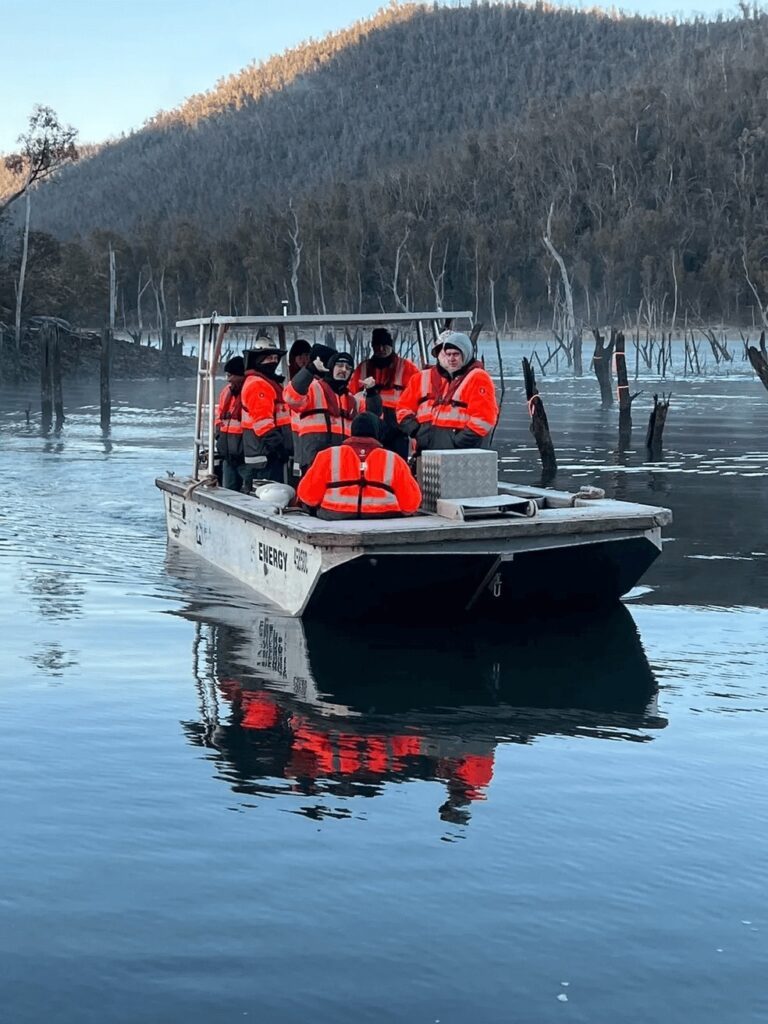
Crew transfers are crucial to the success of short-, medium- and long-term projects. Beyond providing a simple ‘taxi service’, we provide safety briefings and emergency response capabilities.
Our highly trained skippers and comprehensive safety management systems deliver genuine peace of mind, whether supporting construction in Alpine waters or delivering crews to fireworks barges on Sydney Harbour.
What is personnel movement in a marine project?
Personnel movement, also called crew transfer, is the scheduled transport of workers between shore access points and an on-water or waterside work site. On construction, dam, hydro and event projects, it covers shift changes, moving crews to barges and pontoons, transferring inspectors and engineers to structures, and bringing people off site at the end of a day or in an emergency.
It is a live safety obligation rather than a transport line item. The moment your workers step onto a vessel, a marine safety case applies on top of your site safety case, and the person with legal authority over them is the skipper
Why the vessel's passenger class matters more than its size
Australian commercial vessels are surveyed for a class of operation and a certified number of people. Carrying workers as passengers requires a vessel surveyed for passenger operations, with a certificate stating the maximum number aboard and the water it may operate in. Deck space is not the limit. The certificate is.
Boab’s fleet includes vessels surveyed across those categories, so the right answer to all three exists in one place rather than across three suppliers.
This is where crew transfer arrangements come unstuck, usually at the worst moment. A workboat perfectly legal for carrying gear is not automatically cleared to carry a crew of 15, and an operator certified for smooth waters is not cleared to run the same job in partially smooth or open water. Three questions settle it before you book:
| Ask | Why it matters |
|---|---|
| What class is the vessel surveyed to? | Determines whether it may carry your people as passengers at all. |
| How many people does the certificate allow? | The legal number, which is often lower than what fits on deck. |
| What operational area is it cleared for? | Smooth, partially smooth and offshore are separate categories with separate rules. |
What a Boab crew transfer includes
Our crews come from marine, construction and government backgrounds, which means they work inside your safety management system and site induction process rather than around it.
This is the part that separates a crew transfer vessel from a water taxi:

Pre-departure safety briefing for every person aboard, covering lifejackets, emergency exits, muster and skipper's instructions.
Design of the anchoring and mooring layout ,including anchor type, spacing and buoying for the depth, bed type and current at your site
Passenger manifest, so there is a written record of exactly who is on the water at any moment. In an evacuation, this is the document that matters.
Lifejackets and safety equipment provided and fitted to the number of people aboard.
Man overboard and emergency response procedures, rehearsed rather than written down and filed.
Marine radio and shore communications, so the site knows where the vessel is and when it is due.
A skipper with the authority to say no, and the experience to know when a transfer should wait.
Vessels used for crew transfer
Vessel choice for personnel movement comes down to the certified passenger number, the water it is cleared for, and how people get on and off at the far end.
- Small teams on rivers, dams and sheltered water suit a punt such as Little Mate, a 4.9 metre catamaran rated for smooth and partially smooth waters.
- Mid-sized crews suit a fast catamaran like Thunderbolt, a 7.15 metre vessel certified for up to 17 people.
- Open-water transfers suit Crooked, a 9.1 metre tri-hull cleared for 2C operations offshore and certified for 12 people
- Long-range and extended programs suit Wai Nawana, a 15.75 metre monohull certified for 24 with liveaboard capability.
Compliance and skippers
Every Boab vessel is maintained to commercial survey standard and complies with the National Standard for Commercial Vessels under the Australian Maritime Safety Authority (AMSA). Skippers hold current AMSA Certificates of Competency for the vessel and the operational area they are working in, and documentation can be provided for your site induction or safety management system ahead of mobilisation.
On personnel movement specifically, experience is worth more than it is on freight work. A skipper who has run crews in alpine cold, tidal current or Sydney Harbour traffic makes better calls about when to run, how to load and when to hold, and those calls are the whole job.
Where we work
Boab Commercial Marine operates Australia-wide from our base at Oak Flats, New South Wales. A road-transportable fleet means we reach alpine storages, inland dams and remote river systems that coastal-only operators cannot. We work regularly across Sydney and NSW waterways, the Shoalhaven and Illawarra, the Snowy Mountains and ACT, and into Queensland, Victoria, South Australia, Western Australia, Tasmania and the Northern Territory.
Boab’s fleet includes vessels surveyed across those categories, so the right answer to all three exists in one place rather than across three suppliers.
This is where crew transfer arrangements come unstuck, usually at the worst moment. A workboat perfectly legal for carrying gear is not automatically cleared to carry a crew of 15, and an operator certified for smooth waters is not cleared to run the same job in partially smooth or open water. Three questions settle it before you book:
Frequently asked questions (FAQs)
What if our crew is larger than one vessel can carry?
Larger crews are moved either by running shuttle trips against the shift schedule or by putting more than one vessel on the job. Which one suits depends on how tight your start and finish windows are. Send us your crew numbers and shift times, and we will tell you which option costs less across the program.
Do you run scheduled shift changes or on-demand transfers?
Both. Long-running projects usually work best on a fixed daily or shift-based timetable, which keeps costs predictable and lets crews plan around it. Shorter or variable work runs on call. Many projects use a fixed schedule with an on-call arrangement for the unplanned trips.
Can you transfer crew to a barge or structure with no wharf?
Yes. Much of our personnel movement work involves transfers to barges, pontoons, piers and structures with no formal landing. The transfer method is assessed with you beforehand, since step-across transfers depend on freeboard, sea state and what people are carrying. Where conditions make a transfer unsafe, the skipper holds it.
Can you carry tools and materials along with the crew?
Yes, within the vessel’s certified limits. Tools, testing equipment and small plant regularly travel with crews. Larger loads are better moved separately on a punt or barge so the passenger transfer is not delayed by loading, and so the certified passenger number is not compromised by deck cargo.
What happens if a worker needs to come off site urgently?
Marine emergency response is part of the service rather than an add-on. Our skippers are trained for medical retrieval and evacuation from the water, and the vessel maintains shore communications throughout. The response plan for your site is agreed before work starts, including the nominated landing point and who is contacted.
Can you operate at night or in low light for shift changes?
Yes, subject to the vessel, the waterway and the conditions. Night operations need suitable navigation lighting, a lit landing point at both ends and a skipper familiar with the route. Tell us your shift times early, since night work changes the vessel and crew requirements.
What happens if weather stops a transfer?
The skipper makes the call, and we flag a marginal forecast in advance rather than on the morning of the shift. Where a window is closing, transfers are often brought forward instead of cancelled. A crew standing on a wharf costs a full day, so the earlier warning is worth more than the later decision.
Do our staff need an induction before boarding?
Every person receives a pre-departure safety briefing on the vessel, which covers lifejackets, exits, muster and the skipper’s instructions. No marine ticket or prior training is needed. If your project requires our crew to complete your site induction, send it through before mobilisation, and it will be done.
Do you provide crew transfers for events and film work on Sydney Harbour?
Yes. We deliver crews to fireworks barges and event infrastructure on Sydney Harbour, and provide on-water support for film, television and events. Harbour work brings traffic, exclusion zones and fixed timing, so these jobs are planned around the event schedule rather than the other way around.
Personnel movement projects
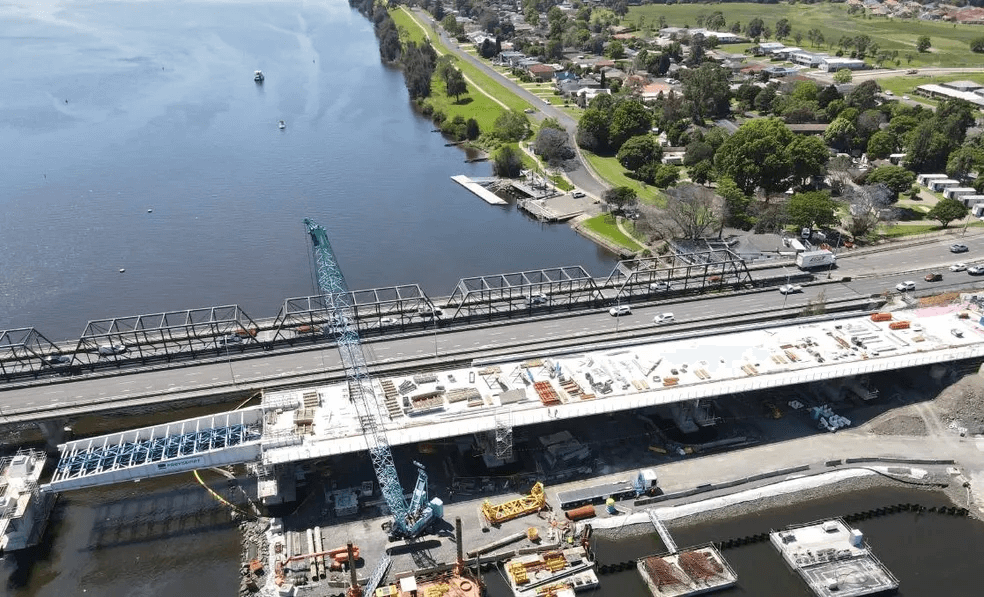
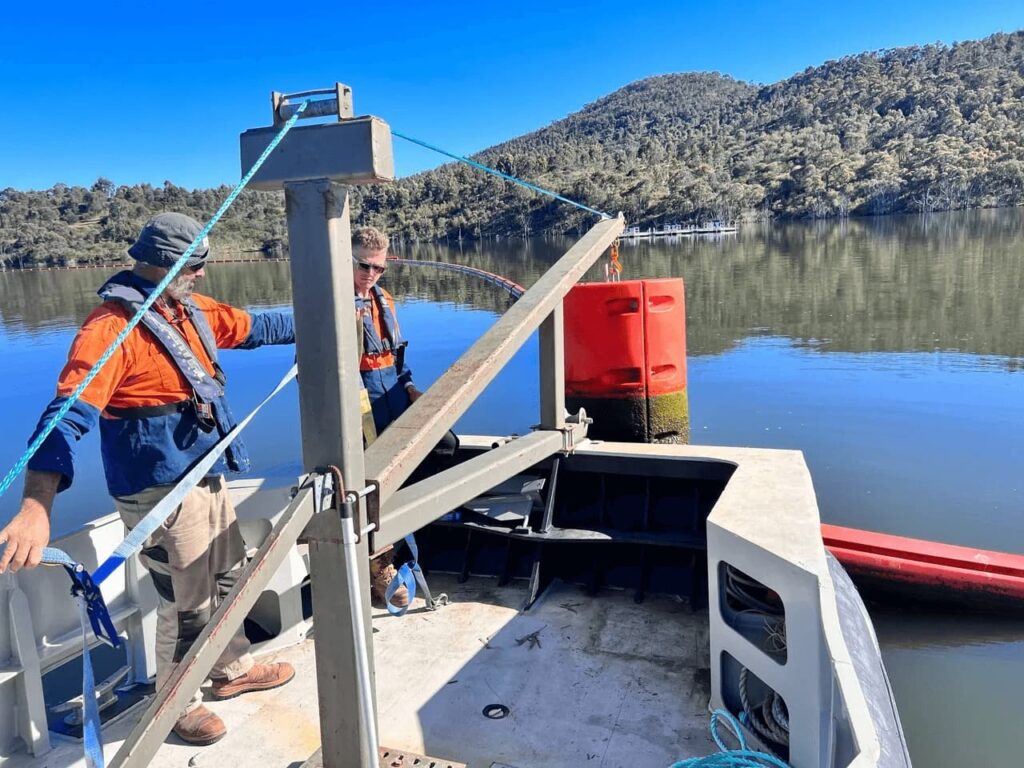
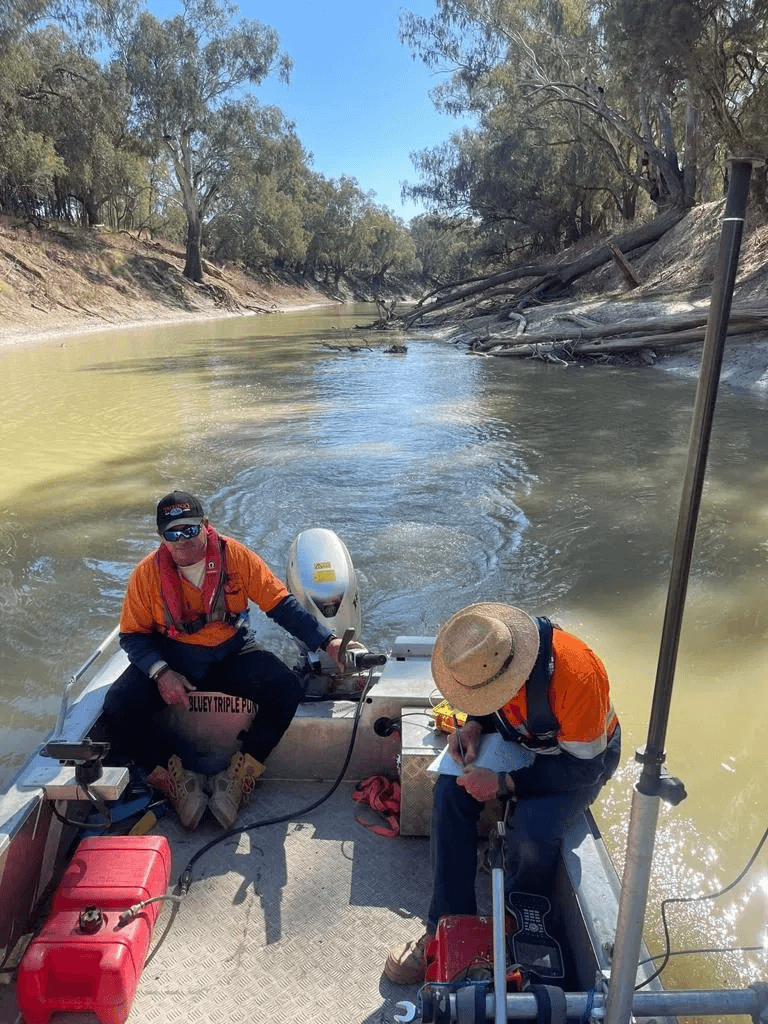
Some of the personnel movement projects our commercial boats and skippers have undertaken…