The Future of Commercial Marine Operations: Trends in Survey Technology, Modular Platforms and Remote Work
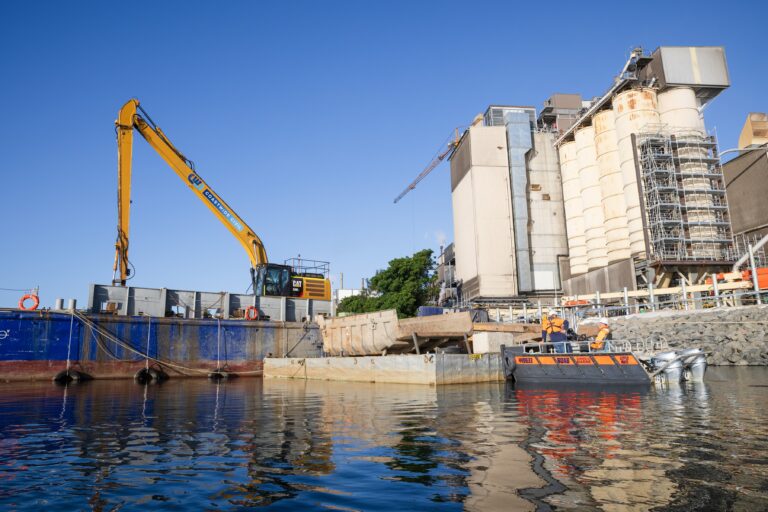
Commercial marine operations across Australia are changing at a practical, operational level. This shift isn’t driven by abstract ideas or short-term experimentation. It’s shaped by site realities, compliance pressure, cost control, and the need to work faster across wider geographic areas. Survey technology, modular platforms, and remote operations are at the centre of that change, particularly for projects that span ports, rivers, coastal zones, and inland waterways.
This transition is reflected in the market as the global USV (Unmanned Surface Vehicle) sector—a key driver of the modern maritime economy— is projected to grow from $0.82 billion in 2025 to $1.59 billion by 2030, a rapid compound annual growth rate of 14.1%. For operators, these Australian marine technologies are already influencing how vessels are selected, configured, and deployed.
So, let’s explore how these systems are being applied today and what they mean for the next phase of your project delivery.
Survey Technology Moves From Specialist to Standard
Marine survey work once required heavy equipment, long setup times, and specialist vessels tied to a single task. That model is fading. Modern survey systems are smaller, lighter, and increasingly vessel-agnostic.
Single-beam and multi-beam sonar, side-scan systems, and GNSS positioning can now be mounted on compact workboats or trailer boats without extensive modification. This opens Australia’s bathymetric mapping capability to a broader range of projects, including shallow water assessments, nearshore mapping, and rapid condition checks.
Another shift lies in how data is handled. Survey outputs are processed faster and shared sooner, reducing downtime between data collection and decision-making. Contractors gain earlier visibility over seabed conditions, asset placement, or dredging progress. That speed matters when projects operate under narrow weather windows or strict environmental controls.
For fleet operators, the implication is clear. Vessels need to support clean mounting points, stable handling, and consistent power supply without being locked into a single survey role.
Modular Floating Platforms Redefine Vessel Use
While advanced sensors provide the data, the physical vessels themselves must be equally adaptable to keep pace with changing project requirements.
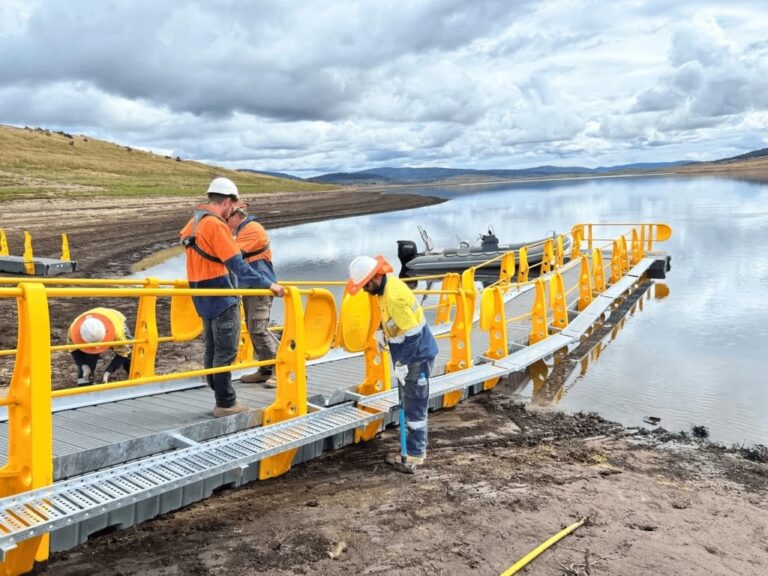
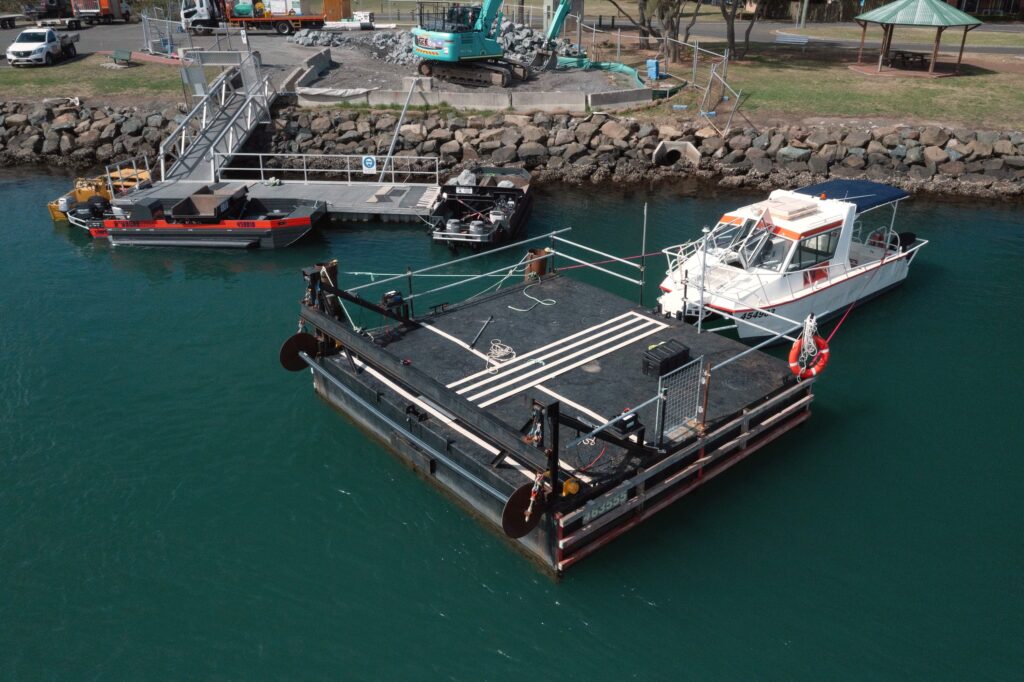
Floating platforms are reshaping how marine assets are used across project lifecycles. Instead of dedicating one vessel to one function, operators are building flexibility into the platform itself.
By utilising deck-mounted frames and removable consoles, a single platform can transition between roles such as:
- Hydrographic survey platforms equipped with sensor mounts.
- Personnel transport with interchangeable seating configurations.
- Light logistics and material delivery via clear deck zones.
- Mobile command units for remote operation oversight.
This reduces idle time and improves utilisation across varied work scopes. Modularity also supports compliance. Equipment can be installed and removed without permanent structural changes, making certification and maintenance simpler. For projects spread across regions, this adaptability allows the same core vessel to meet different regulatory or operational requirements without lengthy refits.
As infrastructure projects become more fragmented and staged, modular thinking fits how work actually unfolds on water.
Remote Operations Expand the Reach of Marine Work
Beyond physical adaptability, the ability to oversee these modular assets from a distance is perhaps the most significant logistical leap for the industry.
An unmanned vessel or remotely assisted survey platform is already in use for specific applications, particularly where access is restricted or risk levels are high. These systems collect data while operators monitor progress from shore-based control rooms or mobile command units.
Even on crewed vessels, remote systems are playing a growing role. Live data feeds, onboard cameras, and telemetry allow surveyors, engineers, and project managers to observe operations without travelling to the site. Adjustments can be made in near real time, reducing rework and repeat mobilisation.
This approach suits Australia’s geography. Projects often span large distances, and moving personnel repeatedly adds cost and delay. Remote capability helps compress timelines while keeping oversight intact.
What These Trends Mean for Fleet Design
This shift toward high-tech, remote, and modular operations is fundamentally changing the requirements for modern vessel design and selection. Stability, deck space, power management, and data integration all matter more than ever before.
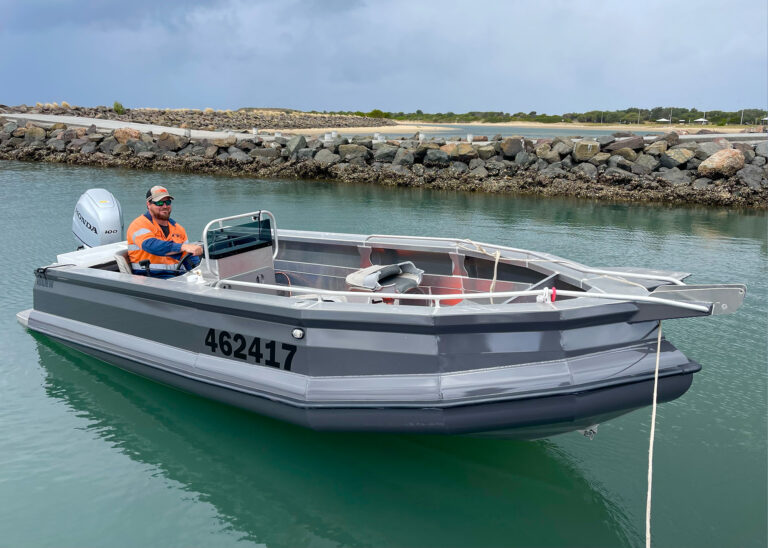
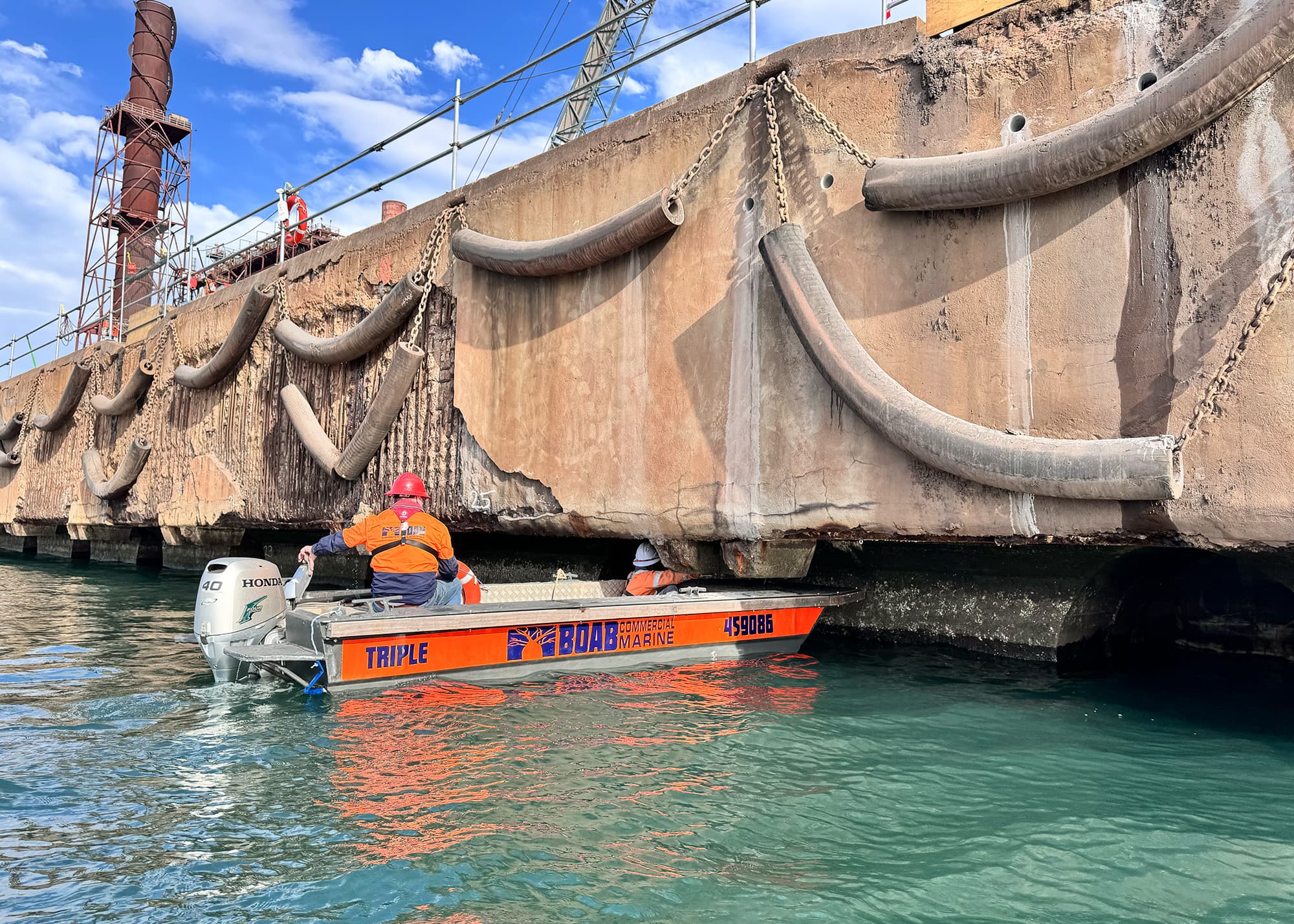
Trailer boats and compact inboard vessels are increasingly favoured for their transportability and access to shallow or confined areas. Their ability to operate across rivers, harbours, and nearshore environments aligns with the spread of infrastructure work beyond traditional ports.
This evolution in maritime transport means fleet diversity becomes a strategic advantage. Operators need access to different hull types, propulsion systems, and deck layouts to match equipment and conditions.
This is where hire models continue to grow. Projects gain access to the right platform at the right time, without committing to ownership or long-term maintenance.
Compliance and Risk Management with Marine Tech
However, the introduction of more sophisticated technology does not simplify the regulatory landscape; instead, it demands a higher standard of operational discipline. Survey accuracy, data integrity, environmental protection, and operational safety all remain under close watch from authorities.
Marine operators with experience across construction, government, and regulated environments are better placed to synchronise new systems without compliance gaps. Equipment installation, crew training, and operational procedures need to align with both maritime and project-specific requirements.
As technology becomes more accessible, the difference lies less in the hardware and more in how it is deployed.
A Practical Direction for Commercial Marine Operations
Ultimately, the future of commercial marine work is defined by a move toward smarter, more agile operations rather than simply building larger vessels. Survey systems grow lighter and faster. Platforms become interchangeable. Expertise travels digitally rather than physically.
Boab Commercial Marine operates within this reality.
With one of Australia’s largest and most diverse trailer boat fleets, now supported by multiple inboard vessels, Boab provides the specific, adaptable platforms required for the next generation of water-based work. Our team’s deep experience across the marine, construction, and government sectors ensures that whether you are integrating complex survey equipment or requiring modular site support, your project remains compliant, efficient, and on schedule.
So, don’t let rigid logistics limit your project’s potential. Partner with Boab Commercial Marine and integrate modern technology with proven Australian maritime industry expertise. Contact us today to discuss your future fleet requirements.