Setting Up an On-Water Film Shoot: Camera Boats, Safety Vessels, and Marine Risk Assessments
A water day looks like a land day with a nicer background. It is not. On land, if something goes wrong, the thing stays where you left it. On water, everything moves: the camera, the talent, the light, the background, and the floor your crew is standing on.
The single most common mistake is budgeting for one boat. Almost every shoot that films on water needs three, and the two nobody costed are the ones that cause the problem at 6 am on the day.
How many boats does a film shoot on water need?
Most on-water shoots need three vessels doing three different jobs: a camera boat carrying the camera team and gear, a safety vessel watching the water and nothing else, and a shuttle moving crew, equipment and catering between shore and the shoot. One boat can sometimes cover two of these roles, but the safety vessel should never be doing anything else.
That last point is the one producers push back on, usually on cost. The answer is simple. A boat holding a camera position is not watching the water. If someone goes in, you want a vessel whose entire purpose is to already be looking.
The camera boat is not a tripod.
Picking a camera boat on deck size alone is how shoots end up with unusable footage. Four things matter more:
- It has to hold position. Running a planned track at low speed and sitting still next to a subject are different skills and require different boats.
- It has to be quiet enough. Hull vibration travels straight into a camera body, and engine noise ruins dialogue. Shots often need the engines off and the boat drifting, which means the skipper is planning the drift before the take starts.
- Its own wake is a problem. The wake your camera boat throws comes back and rocks the picture boat, the talent and the shot. Experienced skippers approach wide and slow for exactly this reason.
- Freeboard sets your angles. A low deck gives you waterline shots. A high deck gives you elevation and a drier camera. You can’t have both on the same hull, so decide which the sequence needs before booking.
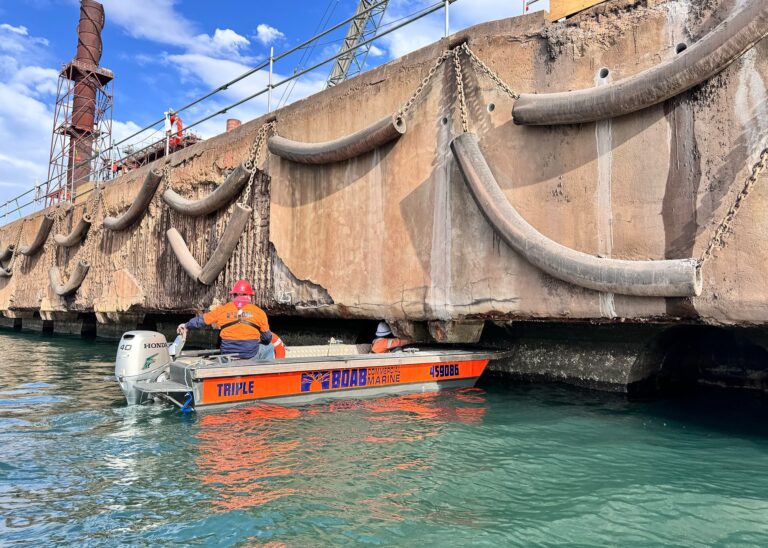
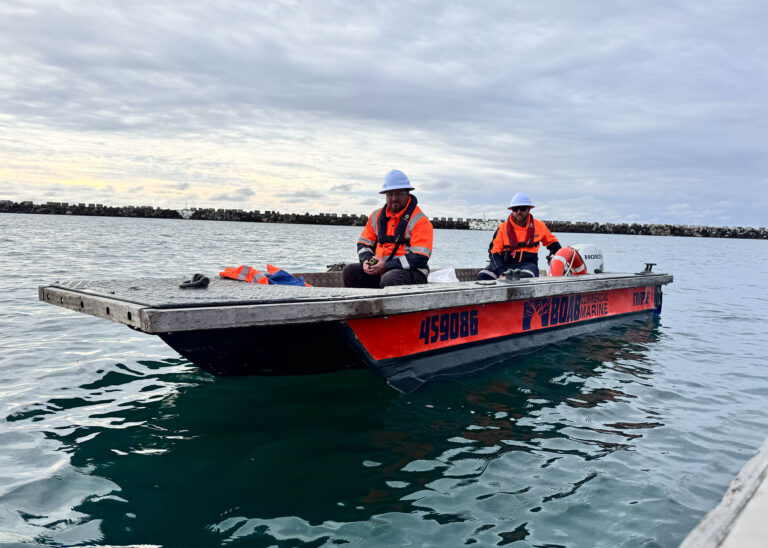
For stable platform work, a non-propelled modular barge is often the better answer than a boat. It gives a large flat deck for lighting, grip and crew; it can be configured to the job, and it doesn’t vibrate because nothing on it is running. It gets positioned and anchored by a workboat and then stays put. Boab’s modular barges are used this way on construction work, and the requirements are closer than they sound.
What a safety vessel actually does
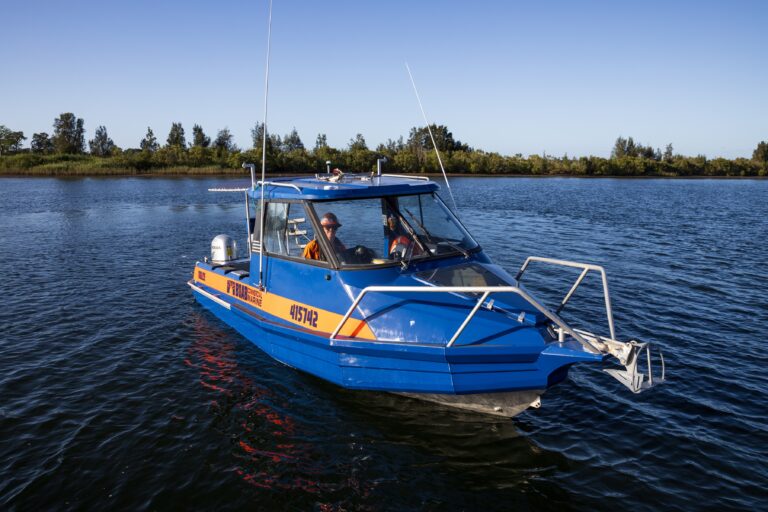
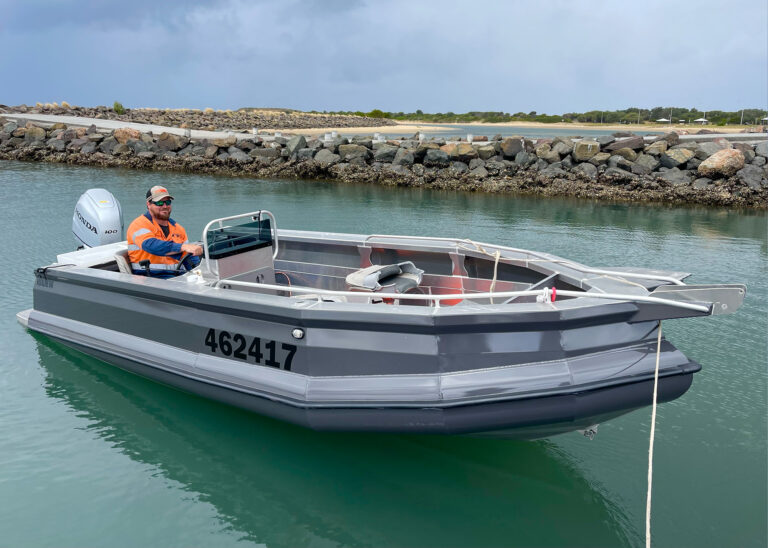
A safety vessel is a crewed boat dedicated to watching the water and responding to anyone who enters it, with no camera, catering or transport duties attached. It holds position where it can reach the shoot fastest, keeps the public and other traffic clear, and carries the crew trained to pull someone out and treat them.
The reason it earns its day rate is that nothing happens on most shoots, and then one day something does. Boab crews are trained in first aid and resuscitation so treatment starts immediately rather than when emergency services arrive, and on event work, the same vessels handle spectator vessel management and onboard observation. On a busy waterway, keeping curious boats out of frame and out of the way is most of the job.
Insurers and waterway authorities tend to ask about your safety vessel before they ask about anything else. If the answer is “the camera boat is also the safety boat”, expect a conversation you do not have time for.
The marine risk assessment, and why it is not a formality
A marine risk assessment identifies what could go wrong on the water, who is responsible when it does, and what controls are in place to stop it. On a film shoot, it covers man overboard, vessel traffic, weather and sea state, talent in the water, equipment loss, and the route anyone takes to hospital.
Treat it as the document that earns permission, because that is what it does. It is what a waterway authority reads before approving an exclusion zone, what your insurer wants on file, and what the production company relies on if anything is ever questioned afterwards. A good one is written with the marine operator rather than handed to them to sign.
What a workable assessment covers:
- Who has authority on the water. The skipper does, and everyone needs to know that before the first call sheet goes out. A director does not get to overrule a weather call.
- Man overboard procedure, including who spots, who retrieves and who treats.
- Conditions that stop the day, written as numbers rather than feelings. Wind, swell, visibility.
- Exclusion zones and notifications, agreed with the relevant waterway authority well before the shoot date.
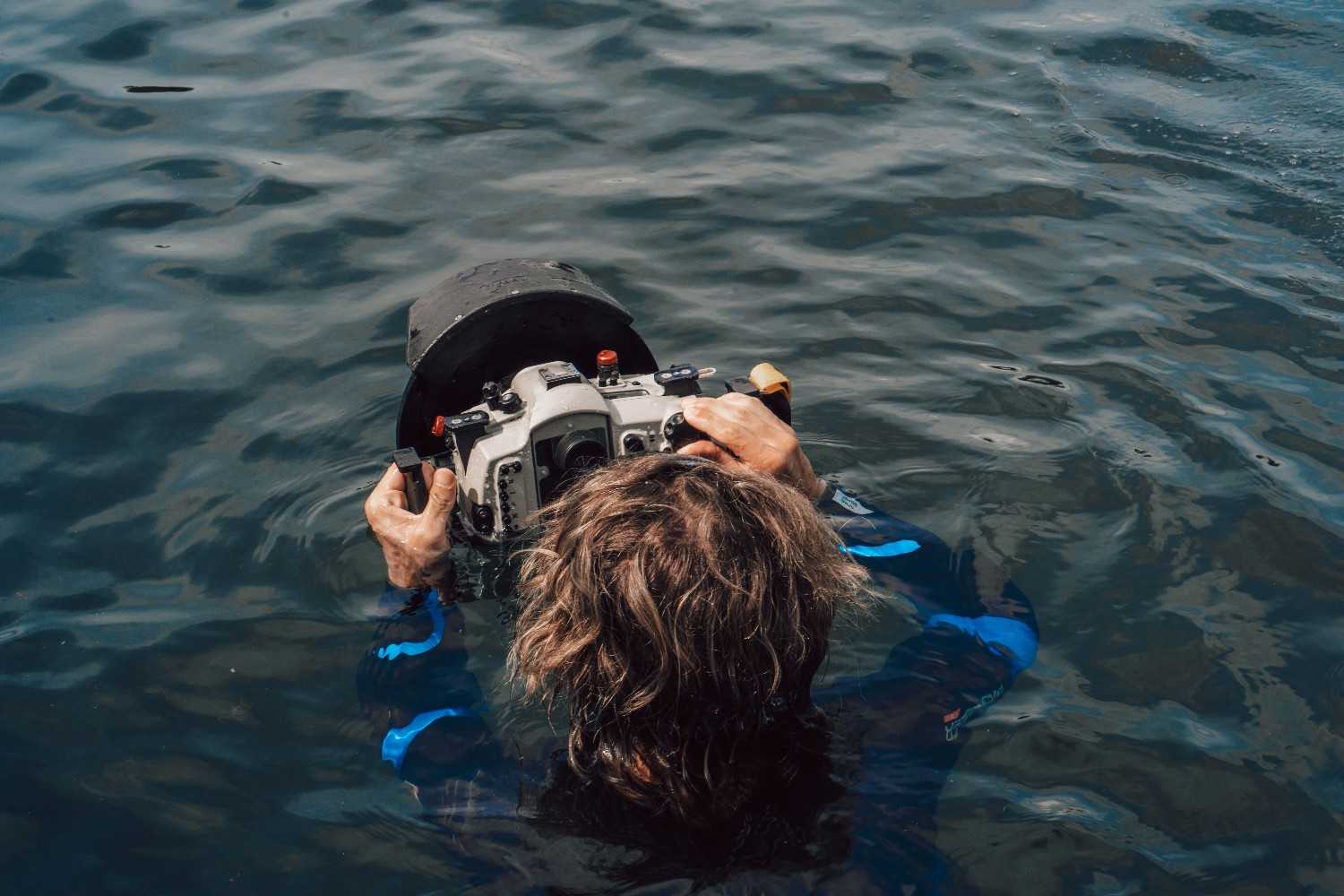
- Talent and crew in the water, including wetsuit and cold exposure limits, and how long anyone stays in.
- The evacuation route, naming the landing point and who makes the call.
- Comms, so shore, camera boat and safety vessel are on one channel and not three phones.
The things that quietly eat your schedule
- Tide is continuity. The waterline in your 7 am establishing shot is not the waterline at 2 pm. At a tidal location, that changes jetty heights, exposes mud and moves your background. Shoot order should follow the tide, not the other way around.
- Light and tide rarely agree. Golden hour happens when it happens, and so does slack water. When they do not line up, something gets rescheduled, and finding that out in prep is free.
- Other traffic does not care. Ferries, recreational boats, and commercial vessels keep running. On busy waterways, this gets managed with exclusion zones and notification rather than hope.
- Getting on and off takes longer than you think. Every crew member, case and coffee moves by boat. Twelve people with gear is not a five-minute transfer, and it happens twice a day.
That last one is why the shuttle is a real line item. Moving crews safely between shore and a work site is a service in its own right, with briefings and a passenger manifest, which also means somebody knows exactly who is on the water at any moment. On a shoot with a floating unit base, that list matters.
Book the operator, not just the boat.
Vessels are straightforward to find; skippers who have worked with a camera department are not. Someone who has done it before understands why you need the engines off, why the approach is wide and slow, and that a take is not over until the first AD says so.
Boab vessels have worked on productions, including Water Rats, SAS Australia and Fishing Australia, and provided water safety for the 2018 Commonwealth Games on the Gold Coast. Different jobs, same requirement: people on the water, a schedule that cannot slip, and someone whose job is making sure both survive the day. Experience is worth checking before booking an operator, and the quickest test is to ask what could go wrong on your shoot. The good ones will talk for ten minutes.
What to send before you ask for a quote
Give a marine supplier these six things, and you will get a real answer instead of a guess: the location and waterway, the dates and call times, crew numbers, what is going on deck, whether anyone will be in the water, and what the camera actually needs to do. On-water assistance for film and television gets quoted off those details, not off a standard commercial boat hire rate.
If you have a water day on the schedule and have not worked out which three boats you need, that is the conversation to have now, not in the week of the shoot. Contact us to tell us what the sequence involves and where it sits, and we will tell you what it takes to run it safely.