
Why Experience Matters When Hiring a Marine Vessel Operator
Every quote you receive will say the operator is experienced. Not one of them will say the operator is a bit green but keen. So the word tells you nothing, and you end up choosing on price, which is how projects find out the hard way that boat handling and marine work are two different skills.
The useful question is not whether your marine vessel operator is experienced. It is experienced at what.
What does experience actually buy you on a marine job?
An experienced marine vessel operator saves you time rather than impresses you with boat handling. They read the weather window correctly, hold the vessel exactly where the work is happening, spot a problem while it is still small, and tell you plainly when a job should not go ahead today. The value shows up as days you did not lose, not as anything visible on the water.
That last part is what makes this hard to buy. Good operating is invisible. Nothing happens. The barge sits still, the crew gets on with it, the day finishes on schedule, and nobody thinks about the person at the helm. Bad operating is extremely visible, but only after the fact.
The four kinds of experience
Most people picture one thing when they hear experienced skipper in a wet hire: someone who has driven a lot of boats. That is one of four, and on a commercial job, it is rarely the one that bites you.
| Kind of experience | What it looks like in practice | What it costs you when it is missing |
| Vessel | Real hours on that hull and that setup, not boats in general | Slow, clumsy handling. Damaged gear, bent props, a day spent recovering something that fell in. |
| Water | Knows the local tides, the bar, the traffic, where the wind funnels | Wrong call on the weather window. Standby days you still pay for. |
| Work | Has supported your type of job before, whether that is piling, survey, dive or silt curtains. | An operator who can drive but cannot hold the boat where the work needs it. |
| Paperwork | Fluent in safety management systems, JSAs, site inductions, incident reporting | A stop-work from the principal contractor, and a very bad morning at the audit. |
The one that surprises people is the third row. A skipper can be genuinely excellent and still be the wrong hire, because driving a boat from A to B and parking a boat in one spot for six hours while a crew works off the side are different jobs. The second one is harder. It is also the one almost every construction, survey and environmental project actually needs.
The fourth row is the one that gets ignored until it cannot be. On a tier one site, your operator is part of your safety system whether you planned for that or not. If they cannot write a job safety analysis (JSA), sit through an induction without complaint, or explain their vessel’s safety management system to your HSE manager, that is now your problem. This is why compliance is easier when it starts with the vessel and the crew together rather than being retrofitted once the boat is already on site.
What a ticket tells you, and what it does not
An AMSA Certificate of Competency proves an operator is legally allowed to command a certain size of vessel in a certain type of water. A Coxswain Grade 1 covers vessels under 12 metres in inshore waters. Master up to 24 metres goes further. However, neither certificate says anything about whether the holder has done work like yours, in water like yours, before.
Worth knowing: the operational area codes attached to every commercial vessel are a real constraint, not just marketing. Smooth waters, partially smooth waters and offshore are separate categories with separate rules, and a vessel and operator set up for one are not automatically cleared for another.
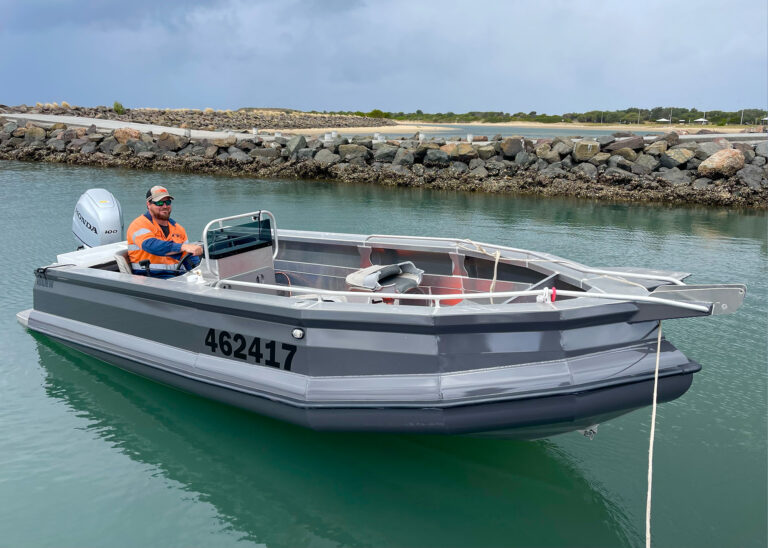
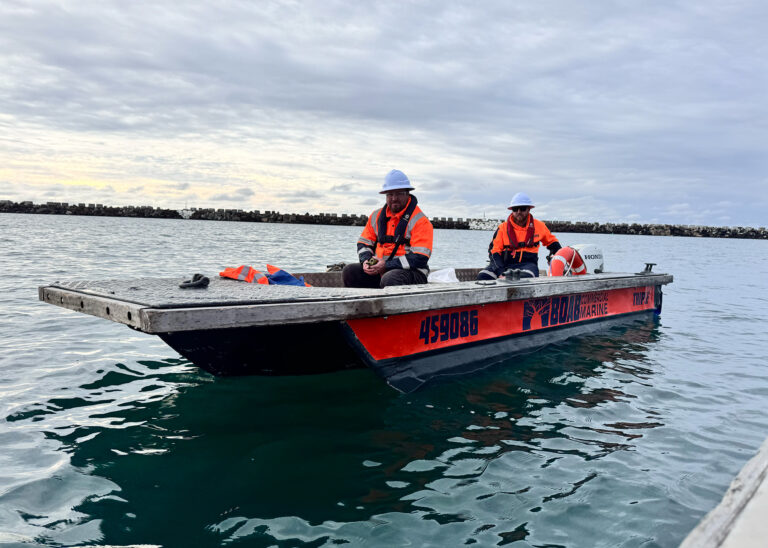
That distinction is easy to see across a fleet. A 4.9 metre catamaran punt is rated for smooth and partially smooth water and is perfect on a river or a dam. A 9.1 metre tri-hull carrying up to 20 is a different class of vessel for open coastal work. Modular barges are something else again, since they are non-propelled, and the skill is in positioning and anchoring rather than driving. Ask which category your job falls into before you ask for a price, because the answer changes both the boat and the person on it.
The genuinely dangerous hire is the boat operator who has plenty of experience, all of it somewhere else. Confidence transfers between waterways. Local knowledge does not.
The skill that never makes it onto a CV
Ask any long-serving skipper what the hardest part of the job is, and you will not hear about navigation. You will hear about the phone call where they tell a client the work is not happening today.
A marine vessel operator with 15 years behind them has been wrong about the weather before and remembers it. That memory is what you are buying. The inexperienced operator, the one desperate to be useful and worried about being blamed for a lost day, will give it a go. Sometimes, that works out. Other times, it produces an incident report, a damaged asset, and a conversation with your insurer that lasts considerably longer than the day you were trying to save.
The same judgement runs the other way, too. An experienced operator will also tell you when a day you have written off is actually workable, as they know the wind drops off in that stretch after two. A good one earns back their rate on both calls.
Questions worth asking before you sign
Call the supplier and ask these. The answers take five minutes and tell you more than any capability statement.
- Who specifically is on my job, and what have they run in the last year? A company can have 30 years of collective experience and still send you someone in their first season.
- Have they worked this waterway? If not, ask what they will do about that. “We’ll get there early and have a look” is a fine answer. Silence is not.
- What jobs like mine have they supported? You want a war story, not a category. Someone who has held station beside a piling rig will tell you about it unprompted.
- What happens if the weather turns? The answer should include who makes the call, how quickly, and what it costs you. Anyone who says it never happens is not worth hiring.
- Can they work under our safety system? Ask for the vessel’s safety management system and see how fast it arrives. The delay is the answer.
One more, and it is the one that sorts people fastest: ask them what could go wrong on your job. Experienced operators enjoy this question and will talk for 10 minutes. Inexperienced ones say it should be pretty straightforward.
Where it shows up on the invoice
Marine work is priced in days, and days are lost in whole units. A crew of eight standing on a wharf because the boat could not safely run is not a small inefficiency; it is a full day of labour, plant hire and program. Two of those wipe out any savings you made choosing the cheaper operator, and nobody ever writes it up that way because the line item just says weather.
Remote jobs magnify all of it. When the nearest replacement part is six hours away, the calculation for working a long way from the nearest boat ramp changes completely, and so does the cost of sending someone who has never done it. The same is true as the equipment gets more specialised, since the technical side of marine operations now runs well past basic seamanship into positioning systems, survey gear and modular platforms.
Ask the awkward question.
Next time you compare quotes for marine vessel hire, ring the supplier and ask who exactly will be on the boat and what they have run recently. It is a slightly uncomfortable question, which is the point. The suppliers who answer straight away, with names and jobs, are the ones worth shortlisting.
If you want that conversation about your job, tell us what the work involves and where it sits, and we will tell you who we would put on it and why.