The Hidden Challenges of Working on Water: What Most Land-Based Projects Don’t Consider
Pouring concrete on solid dirt is predictable. Pouring it while suspended over a tidal estuary with a two-knot current tearing at your scaffolding is a logistical nightmare. Most land-based contractors assume marine construction is just standard building with a slightly better view. That single assumption routinely bankrupts projects.
The moment you step off the shoreline, every basic operational rule changes. You lose your static foundation. You lose easy access to materials. Suddenly, the weather is not just an inconvenience—it is a critical safety hazard capable of shutting down your site for days. Here is exactly what you are up against when you trade the dirt for the deep.
The Myth of a Static Foundation
When you build on land, your site sits still. When working over water, your entire foundation moves. Tidal shifts, boat wakes, and wind swell mean your workspace is in a state of constant, unpredictable motion. You can’t simply roll a standard crane up to the edge and hope for the best.
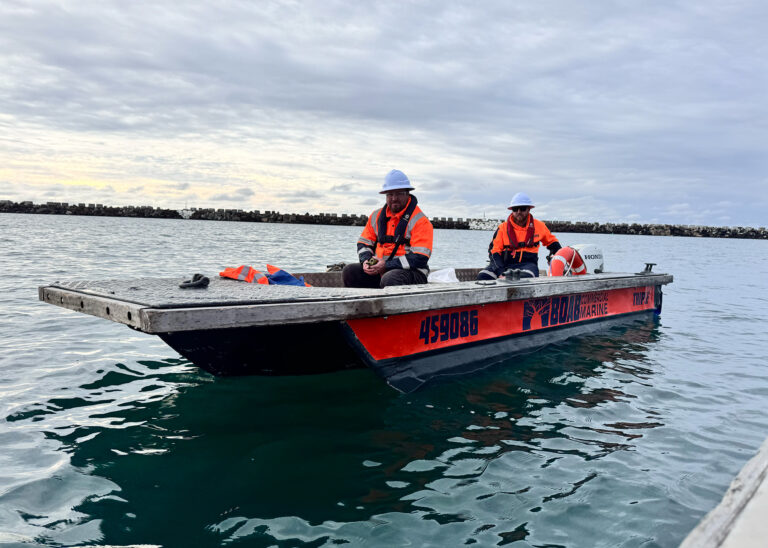
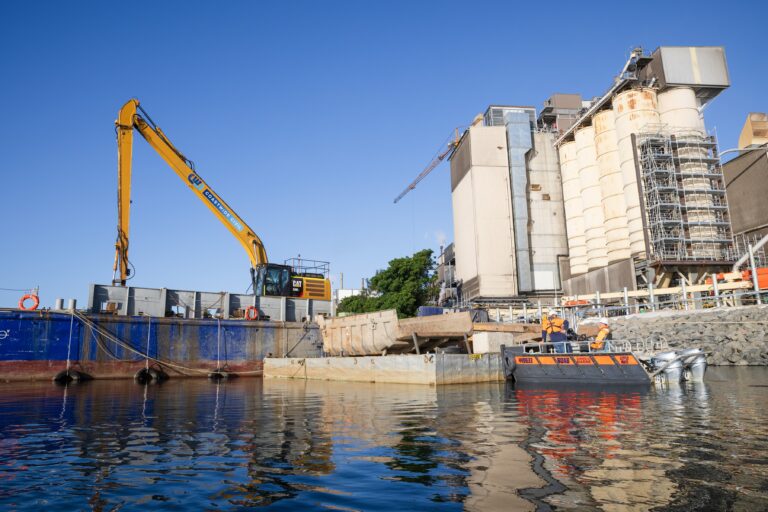
Achieving millimetre-perfect precision for bridge pylons or floating jetties requires specialised modular barges and heavy-duty punts that physically anchor against the tide. You have to calculate load balances dynamically. If a 10-tonne excavator shifts too quickly on a floating platform, the entire deck lists. Make a mistake here, and you put your crew and millions of dollars of machinery straight into the drink.
The Logistics of Isolation and Equipment Decay
On a standard site, if you run out of screws, a runner jumps in a ute and hits the local hardware store. On the water, a missing tool grinds everything to a brutal halt.
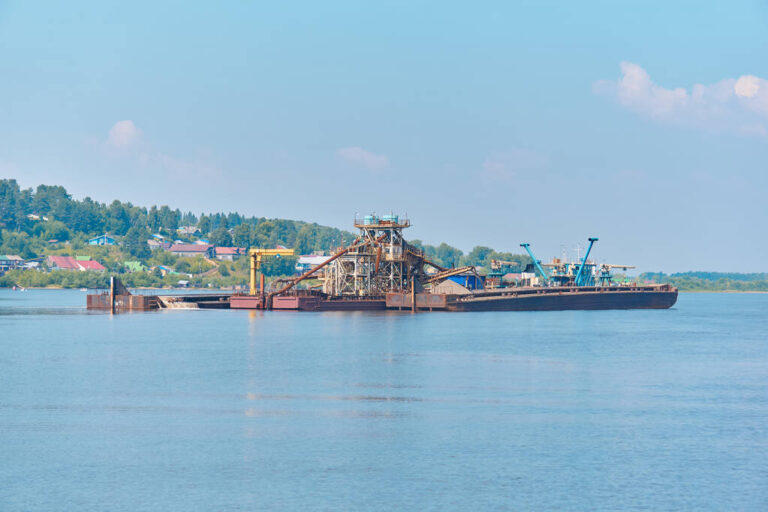
Logistics dictate the survival of marine construction projects. Every piece of equipment, from heavy structural steel down to the last drill bit, must be loaded onto a commercial vessel, secured against transit movement, and navigated to the site. You are managing a constantly moving supply chain. If the tide drops too low before your supply barge arrives, your crew might sit idle for six hours waiting for the water to return.
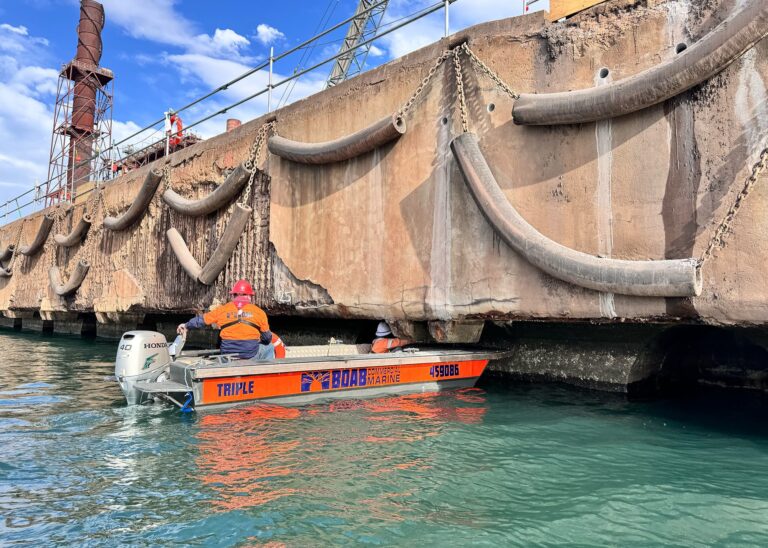
Then there is the corrosion factor. Saltwater actively destroys standard construction gear. Leaving an unprotected excavator parked on a barge overnight exposes the hydraulics to highly corrosive sea spray. You must use specialised marine-grade materials, implement rigorous daily wash-down procedures, and heavily lubricate moving parts just to keep the site operational.
Beneath the Surface: Blind Engineering
Everything above the waterline is difficult. But the real complexities begin in the dark. Undertaking underwater marine construction means fighting zero visibility, aggressive cross-currents, and immense hydrostatic pressure.
Consider the reality of pouring concrete. You cannot just dump standard mix into the ocean; the current will wash the cement paste away instantly. You have to use specialised ‘tremie’ pipes to pump concrete from the bottom up, displacing the water without ever mixing with it.
Whether you are laying submarine cables, repairing bridge pylons, or undertaking subsea welding, your divers are often operating entirely by touch. A single wrong move kicks up thick sediment, plunging visibility to absolute zero. You must rely heavily on remotely operated vehicles (ROVs) and high-definition drop cameras just to verify basic structural integrity before the divers even hit the water.
Brutal Environmental and Safety Compliance
The regulatory framework for operating on the water is significantly heavier than any land-based equivalent. The ocean is an unforgiving, hyper-sensitive ecosystem.
A minor hydraulic oil leak on a dirt site means shovelling up contaminated soil. A hydraulic leak over a river triggers a massive environmental emergency. You’re legally required to deploy and manage rapid containment systems, like silt curtains and log booms, before a single tool is lifted.
Strict compliance with Australian Maritime Safety Authority (AMSA) regulations dictates every move you make. Your vessels must be in survey, your skippers must hold commercial certifications, and your safety protocols must account for man-overboard scenarios and rapid weather deterioration. Failing an AMSA inspection doesn’t just result in a fine; it shuts your operation down indefinitely.
Outsourcing to the Experts
You cannot fake your way through this environment. Attempting to tackle a water-based build using standard terrestrial contractors guarantees blown budgets and severe safety breaches.
This is exactly why smart project managers outsource the logistics and heavy lifting to dedicated marine construction services. It is far cheaper to bring in the veterans on day one than to pay them to salvage a half-sunken barge on day thirty. Securing the right commercial vessels, compliant skippers, and modular work platforms is non-negotiable.
To keep your project moving safely and aggressively, partner with the specialists at Boab Marine. We provide the specialised commercial fleet, the local knowledge, and the hard-won experience necessary to conquer the water. Water is relentless, but with the right vessels and a battle-tested crew, your project doesn’t have to sink.