Safety at Sea: How Professionals Keep Marine Projects Incident-Free
Marine environments are as challenging as they are vital, which explains why managing marine safety is a complex and continuously evolving discipline. Conditions shift quickly. Regulations are layered.
So how do professionals keep marine projects incident-free?
In a nation like Australia, which boasts stewardship over one of the world’s largest and most biologically diverse marine environments, safety is not an afterthought. It’s engineered into every stage of planning and execution. Across marine projects, safety frameworks are built around preparation, environmental awareness, operational discipline, and procedures. Because at sea, assumptions cost more than time—they carry risk.
How Many Marine Protected Areas Are There in Australia?
To understand the operating environment, first, we need context.
Australia manages more than 60 Australian Marine Parks, covering roughly 43% of Commonwealth waters. These marine protection projects safeguard biodiversity while allowing regulated commercial and research activity.
That scale changes everything.
Marine projects operating in or near protected zones must align with strict environmental and safety requirements. National guidance from Parks Australia outlines how marine protection projects and operational activity can coexist through planning, monitoring, and strict compliance.
How Professionals Keep Marine Projects Incident-Free
Every commercial marine operation begins long before a vessel leaves port.
Detailed assessments and a clear marine rescue plan are developed before work starts. Operational scopes are reviewed as well. Most certainly, all these evaluations and plans are clearly communicated across crews.
A proper marine rescue plan outlines:
- Emergency response procedures
- Communication chains
- Escalation protocols
- Equipment allocation
- Role clarity under pressure
When conditions change, hesitation is removed from the equation.
Strong marine safety procedures also rely on consistency:
- Pre-departure vessel inspections
- Defined weather thresholds
- Crew briefings with hazard review
- Permit and compliance confirmations
- Real-time operational monitoring
Incident-free marine projects Australia-wide are rarely accidental. They are structured.
Environmental Control as Operational Risk Management
Environmental compliance is not separate from safety. It reinforces it.
Professional marine teams integrate environmental services into safety planning. For example, silt curtain deployment reduces sediment drift during nearshore works, protecting ecosystems and stabilising site conditions. Controlled environments reduce unpredictable risk.
Hydrographic Surveying: Reducing Unknowns Before Work Begins
Uncertainty is one of the biggest safety threats at sea.
Before construction, dredging, installation, or infrastructure work begins, professional teams rely on hydrographic survey services to map seabed conditions, depths, and hazards.
Accurate survey data informs:
- Vessel positioning
- Equipment placement
- Anchor points
- Navigation paths
- Load distribution planning
When survey intelligence is integrated early, risk exposure reduces significantly. Safe marine projects in Australia depend on knowing what lies beneath the surface before committing resources above it.
Purpose-Built Vessels and Operational Fit
Not all vessels are interchangeable.
The wrong platform increases instability, reduces efficiency, and elevates risk. The right vessel supports control.
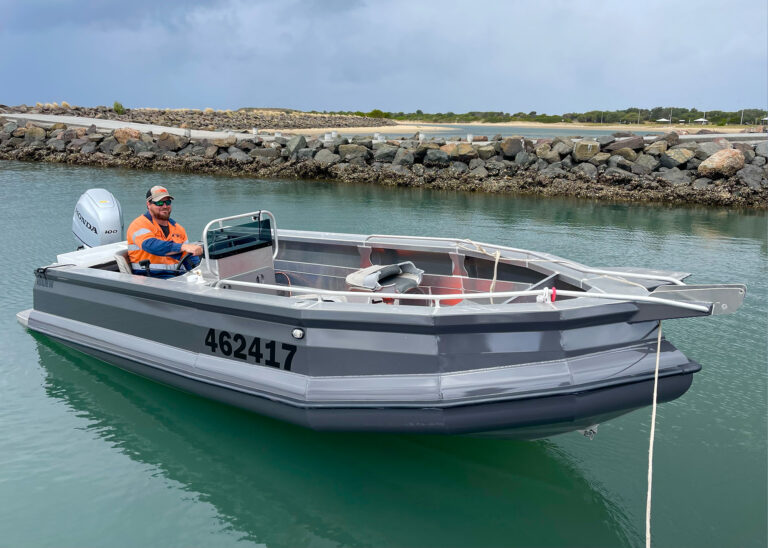
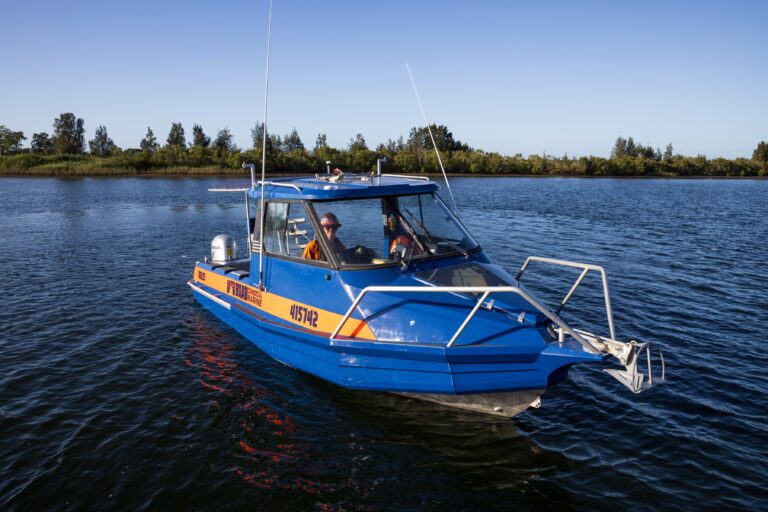
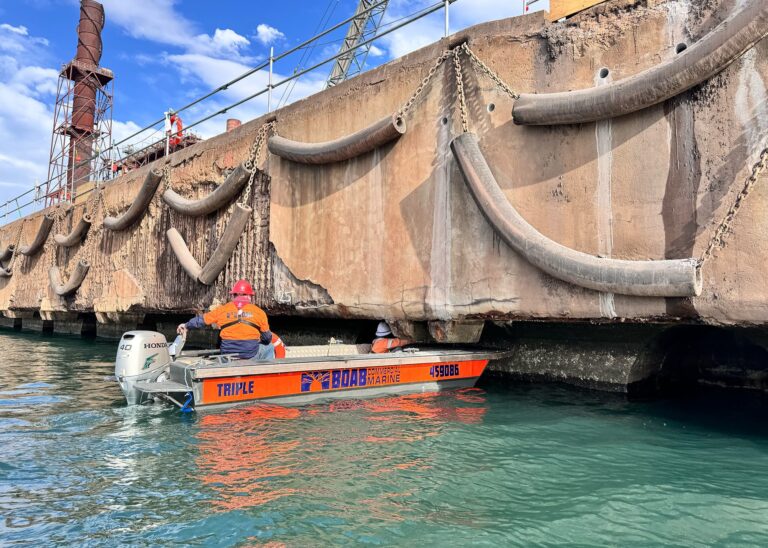
Boab Marine maintains a fleet of commercial vessels suited to various marine projects Australia-wide, including transport, environmental works, survey support, and construction operations.
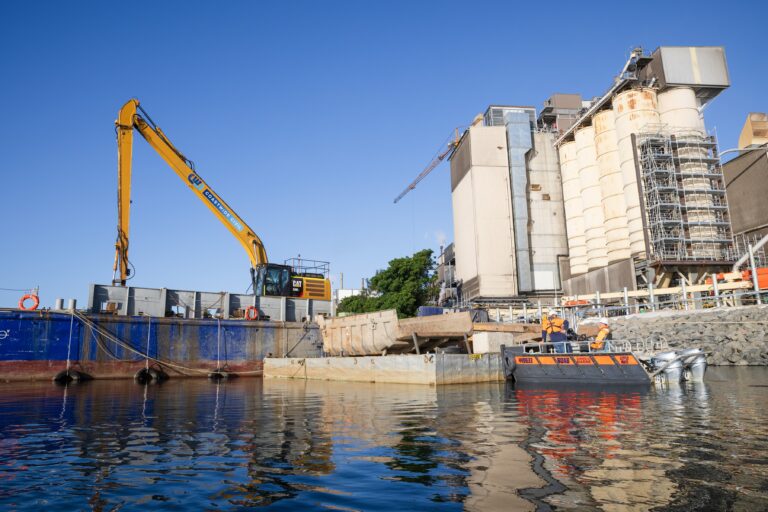
For heavier marine construction and infrastructure deployment, commercial barges provide stable platforms for lifting, loading, and controlled installation.
Safe Movement of Personnel and Equipment
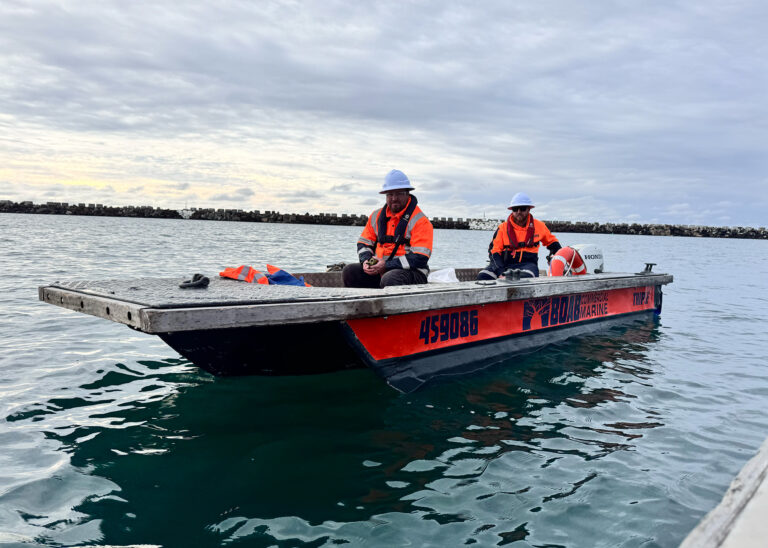
Transporting people offshore introduces additional variables. These include weather exposure, boarding transitions, and load coordination. Personnel movement services must operate under strict marine safety procedures, with clear embarkation processes and experienced crews.
Moving people at sea demands structure, not improvisation. Specialist transport scenarios, such as supporting film and television productions at sea, require even tighter coordination. Equipment sensitivity, strict schedules, and passenger safety must align seamlessly.
Ports, Maritime Operations, and Research Environments
Some marine projects operate within regulated port environments. Others support long-term marine research programs. Both introduce heightened coordination requirements.
Ports and maritime services involve navigation planning, infrastructure proximity, and shared waterways. On the other hand, marine research often operates within sensitive zones tied to marine conservation projects.
In both environments, marine rescue planning, risk documentation, and disciplined marine safety procedures remain central.
A Professional Standard Across Marine Projects
Keeping marine projects incident-free requires more than compliance.
To break it down simply, the process requires:
- A defined marine rescue plan before mobilisation
- Embedded marine safety procedures across all teams
- Accurate hydrographic survey data
- Purpose-built commercial vessels and barges
- Integrated environmental controls
- Skilled crews trained for escalation scenarios
All in all, what really brings these elements together is consistency. Systems must connect. Plans must be communicated clearly. Crews must understand not just what to do, but when and why.
Professional marine operations recognise that safety is ongoing, not occasional. Structured oversight and disciplined execution ensure projects remain controlled from mobilisation through completion.
For organisations seeking support across environmental services, survey operations, commercial barges, personnel movement, research support, and regulated maritime operations, Boab Marine provides nationwide marine services.
To discuss a project or a specific operational requirement, contact our team today.